
Anyone investing in high-quality latex clothing such as catsuits or leggings should ensure that they are cleaned gently to keep the material supple and shiny in the long term. But what exactly is latex material? Latex is obtained from the latex sap of the rubber tree and is a natural material.
This natural origin requires particularly careful care. Instead of aggressive cleaning agents, you should use special latex detergents. Home remedies for natural rubber care such as washing-up liquid or all-purpose cleaners damage the sensitive material.
It is ideal to clean the latex parts in the hand basin or bathtub. To do this, fill a bucket or tub with lukewarm water and add about a teaspoon of latex washing detergant. Mix the mixture by hand to create an even solution. Wash each item of clothing individually in it for a few seconds - that's all you need.
The detergent should then be thoroughly rinsed out of the clothing! Fill another bucket with lukewarm water and this time add a teaspoon of silicone oil. Mix the solution thoroughly. Then place the items of clothing one by one in the water-silicone oil mixture. Press each item briefly and firmly and then remove it again.
Then hang the items up to drain. This prevents sticking and at the same time promotes an even shine on the surface. With this method, your latex items will not only retain their appearance, but also their elasticity.
Washing machine & latex: does it work?
In principle, latex clothing can also be cleaned in the washing machine, but only with great care and the correct procedure. Anyone wondering how best to care for latex in the machine should strictly observe a few rules. Set the temperature to a maximum of 30 degrees, do not use the spin cycle at all and use a special detergent for latex. Pour this directly into the drum or into the main compartment. We also recommend using a deep conditioner such as our Amor All, which is added to the fabric softener compartment. It provides additional protection for the material and prevents sticking during the wash cycle.
Select a particularly gentle wash programme, such as the delicate or wool programme, and make sure that the drum is not too full. Latex is heavy and can put a strain on the machine. After washing, the appliance can be used again as normal, provided that you run an empty cycle at 60 degrees and detergent after using silicone oil as a fabric softener. This removes residues and keeps the machine clean.
Special cases when washing
Even if many cleaning tips seem universal at first glance, not every type of latex wash can be treated in the same way. In particular, damaged or chlorinated items require special care. Incorrect cleaning can not only permanently damage the surface, but also make subsequent repairs considerably more difficult.
Caution is required with chlorinated latex clothing in particular, as the chlorine process makes it more resistant, but also more sensitive to certain care products. Tears, small holes or glued areas also require particularly gentle handling.
In the following section, we will show you exactly what you should pay attention to when cleaning special Latexarticles - so that your latex underwear remains wearable for a long time and does not lose any of its quality.
Clean latex properly before repairing
Thorough pre-cleaning is essential before damaged garments come into our workshop. For a professional repair, you must send in your latex clothing completely free of silicone oil and well powdered. Items containing oil cannot be processed by us. You should therefore wash the affected items several times with a suitable detergent until all residues have been removed.
Powdering is an important step to prevent the clothing from sticking during transport.
This preparation protects the material and ensures that your latex clothing arrives safely and ready for repair - without compromising on quality.
Special features of chlorinated latex
Chlorinated latex is particularly easy to care for and offers several advantages over untreated latex clothing. Cleaning is basically the same as for conventional latex clothing - but with the added bonus that the items no longer stick together after washing. This eliminates the need to use a dressing aid in many cases.
Another advantage is that chlorinated latex dries faster and is generally easier to handle. Nevertheless, the surface should be treated with a glossing agent such as beGloss "Perfect Shine" after drying in order to preserve the typical latex look. However, please note that gloss care products do not adhere as long to chlorinated latex as they do to untreated material.

Drying and storage
Care should be taken when drying latex. A tumble dryer is only suitable to a limited extent and should only be used by experienced users. This is because powder or silicone oil can contaminate the appliance and affect subsequent washes. The rule of thumb is: anything that is not suitable for the washing machine does not belong in the tumble dryer.
If you still want to try it, you should only use cold air or minimal heat. A towel can be placed in the tumble dryer for the first few minutes to absorb excess moisture. It is important that the towel does not cause dull patches on the surface due to friction. Alternatively, slightly damp clothing can be sprayed with beGloss Perfect Shine and treated in the dryer for 10-15 minutes without a towel - the result is an evenly shiny surface.
In addition to correct drying, storage also plays an important role. Always store latex clothing in a dark place away from light, as UV radiation can cause the material to become dull and grey over time. Like leather, latex also requires regular care with special nutrients to keep it supple. In our online shop, we offer matching garment bags for larger items such as catsuits or dresses - ideal for safely storing your latex clothing.Care products and routines
Careful aftercare is essential to ensure that latex clothing remains permanently elastic, shiny and comfortable to wear. After washing and drying, we recommend using high-quality silicone oil - it maintains suppleness, prevents sticking and makes it easier to put on. This care routine is particularly essential for silicone clothing, as the oil is skin-friendly and dermatologically tested.
Chlorinated latex also benefits from occasional silicone oil treatments to maintain its elasticity. Latex shine sprays or polishes are used for a particularly intense shine. These products are characterised by a specially formulated viscosity and penetrate deep into the material. In combination with the beGloss microfibre cloth, you can achieve optimum results. It is particularly gentle on latex, making it the perfect addition to gloss care.
Caution with silicone clothing and silicone dildos
Latex and silicone do not mix well when stored for long periods of time. If they are stored together, the sensitive latex material can be damaged. If, for example, silicone clothing such as tops or breast enlargements, but also dildos or other silicone items are stored together with latex in a drawer, material reactions can occur at the contact points. This results in unsightly ripples, bubbles or dull patches on the latex surface.
Such damage can sometimes be minimised by soaking in cold water for a long time, but it cannot usually be completely eliminated. It is therefore important to always store silicone items separately from latex clothing, ideally in separate bags or compartments. This will keep the surface of your latex smooth, supple and attractive.
Maximise durability with the right care
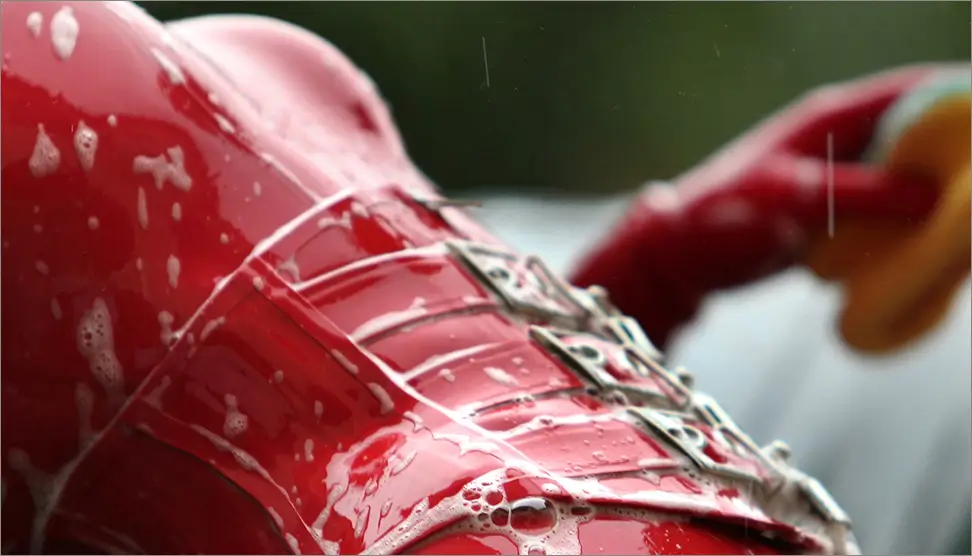
Well cared for latex clothing not only looks good, but can also be worn for many years. A consistent care and cleaning routine is crucial for this. The material should be washed thoroughly after each wear to remove any residue from skin, sweat or care products. High-quality care products help to maintain the lustre and elasticity of your latex clothing in the long term.
Dark storage provides reliable protection against UV radiation, which can cause the material to fade and become brittle. It is also essential to avoid contact with grease, oil or other unsuitable substances, as these can permanently damage the structure of the latex. The frequency of wearing also plays a role. The better the care, the more often a garment can be worn without losing quality.
The combination of regular cleaning, correct storage and suitable care products ensures a high level of comfort and that your latex clothing will give you pleasure for as long as possible.